Every week we receive the same message from couples in New York, London or Copenhagen: “We’re dreaming of getting married in Spain — but is it even legal for us?” The short answer is yes, you can absolutely get married in Spain as a foreigner. The honest answer is that how you do it matters enormously, because Spanish law makes a legally binding civil wedding surprisingly difficult for non-residents — and there is a far more elegant route that the vast majority of international couples take.
In this guide we’ll walk you through the real legal requirements, the documents and costs involved, and the option we plan most often at Agape: completing the legal formalities at home and celebrating a beautiful, deeply personal symbolic ceremony in Spain.
Can foreigners legally get married in Spain? The quick answer
Yes — but with an important catch. For a civil marriage in Spain, at least one partner must have been a legal resident of Spain for a minimum of two continuous years immediately before the wedding. If you’re both flying in from the US, the UK or elsewhere in Northern Europe, you won’t meet this requirement.
That leaves international couples with three realistic paths:
- A Catholic church wedding in Spain — legally recognised and with no residency requirement, but with its own strict religious conditions.
- A legal ceremony at home + a symbolic ceremony in Spain — by far the most popular choice, and the one we recommend to most of our couples.
- A civil wedding in Spain — only if one of you genuinely lives here (or is a Spanish citizen).
Option 1: A Catholic wedding in Spain
Spain recognises Catholic ceremonies as legally binding, and — unlike civil weddings — there is no residency requirement. However, the conditions are strict:
- At least one of you must be a baptised Catholic.
- Neither of you can be divorced from a previous Catholic marriage.
- Paperwork must be prepared in your home diocese, translated into Spanish by a sworn translator, apostilled, and received by the Spanish church roughly two months before the wedding — with most documents valid for only six months.
- You should begin the process at least six months in advance, and some churches will want to meet you in person before the ceremony.
For couples who are practising Catholics, this can be a wonderful option — Catalonia’s historic churches and basilicas are extraordinary settings. For everyone else, it’s usually a non-starter, which brings us to the route most of our couples take.
Option 2: Legal at home, symbolic in Spain — what most couples actually do
Here is the open secret of destination weddings in Spain: most international couples are not legally married on Spanish soil. They complete the civil formalities quietly at their local registry office at home — a 20-minute appointment, often just the two of them and two witnesses — and then celebrate their real wedding in Spain: the vows, the emotion, the family, the celebration.
A symbolic (or celebrant-led) ceremony has enormous advantages:
- Zero legal paperwork in Spain. No apostilles, no sworn translations, no civil registry appointments, no two-year residency rule.
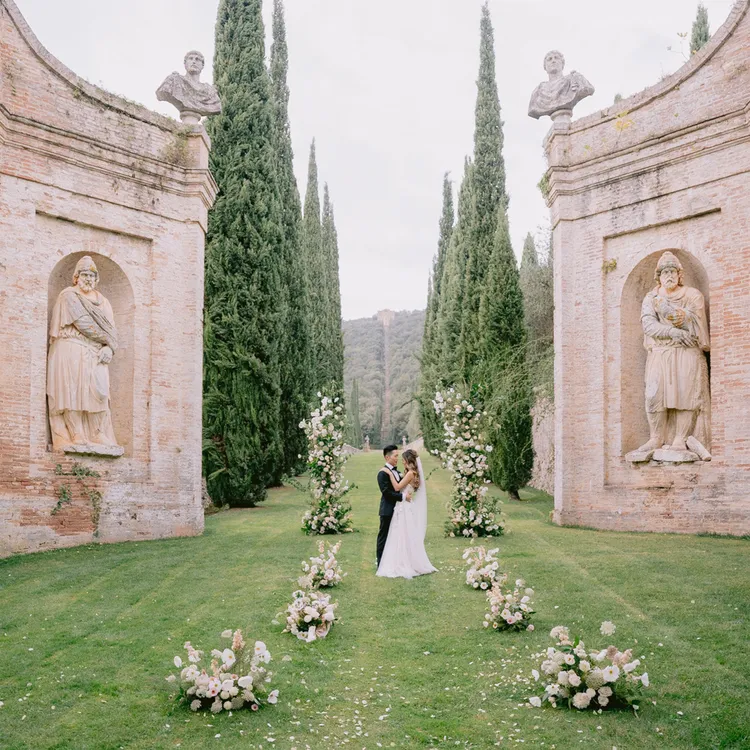
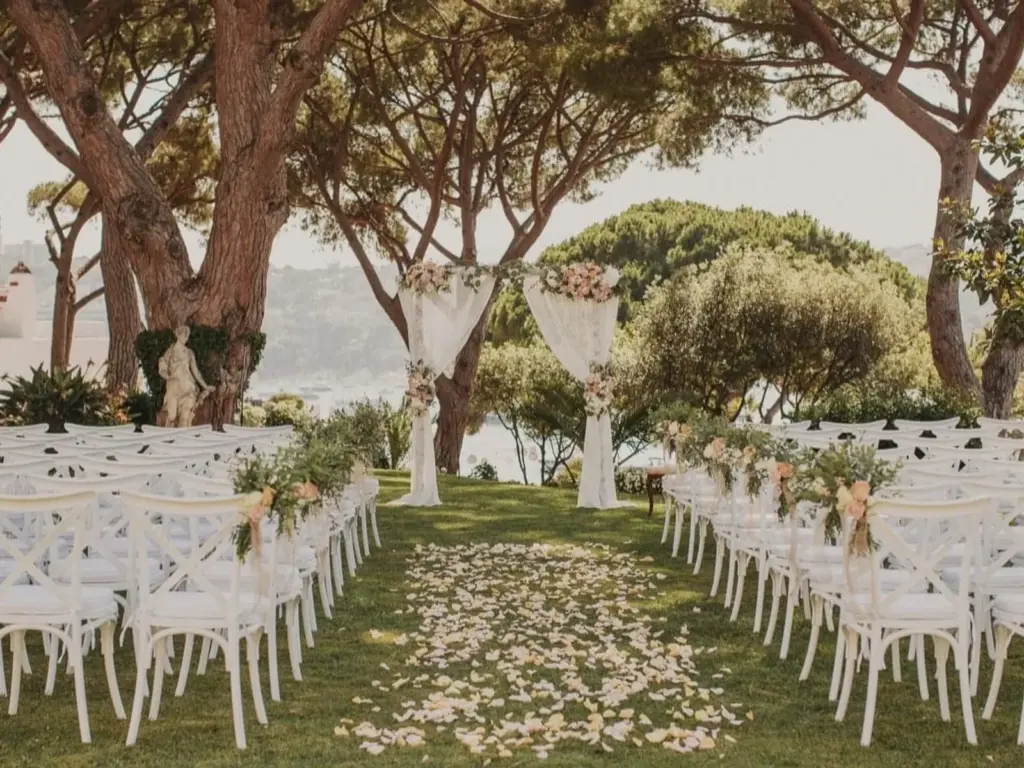
- Total freedom of design. Your ceremony can happen at sunset in a castle courtyard, barefoot on the sand, or under century-old olive trees — at any time, in any language, with any ritual that is meaningful to you: hand-fasting, sand ceremonies, blessings from both families’ traditions, spiritual rituals, or vows you’ve written yourselves.
- No time pressure. Legal ceremonies in Spain are scheduled by the registry, not by you. A symbolic ceremony happens exactly when the light is most beautiful.
- Identical experience for your guests. Nobody in attendance experiences it as anything less than your wedding — because it is your wedding.
At Agape this is the heart of what we do: soulful, personal ceremonies crafted around each couple’s story, led by celebrants who take the time to know you. If you’d like to see what this looks like in practice, explore our Barcelona wedding planning services or our guides to venues like Castell de Sant Marçal and La Baronia.
Option 3: A legal civil wedding in Spain
If one of you does meet the residency requirement — or holds Spanish citizenship — a civil wedding in Spain is entirely possible. Expect the following:
- The marriage file (expediente matrimonial). You open a file at the Civil Registry corresponding to your address, submitting all documentation. Processing typically takes 2 to 6 months depending on the registry.
- A pre-marriage interview. Many registries require a short hearing to confirm the marriage is genuine and freely chosen.
- The ceremony itself at the Civil Registry, town hall or court — legally binding and internationally recognised.
The documents you’ll need (for any legal route)
Whether for a civil or Catholic wedding in Spain, expect to prepare:
- Valid passports (originals and copies)
- Full birth certificates, apostilled and translated into Spanish by a sworn translator
- A Certificate of No Impediment (CNI) or certificate of capacity to marry, proving you are free to marry — issued by your home country. UK citizens: since February 2025 applications for the CNI or Marital Status Certificate are made online through gov.uk, and if you’re marrying in Barcelona city through the Central Civil Registry you’ll specifically need an MSC.
- Proof of civil status; divorce decrees or death certificates from any previous marriage
- Certificate of residence / empadronamiento where applicable
Two practical warnings from experience: consulates can be slow issuing certificates, so start early — and several documents are only valid for a limited period (often six months), so the order in which you request them matters.
What does the legal side cost?
If you pursue a legal ceremony in Spain, budget roughly €600–1,500 for documentation, apostilles, sworn translations, registry fees and related travel for appointments — on top of your wedding budget itself. A symbolic ceremony eliminates almost all of this: your only legal cost is the registry fee at home, typically under €100 in most US states and around £50–100 in the UK.
What about Gibraltar?
One alternative worth knowing: some couples choose a legal ceremony in Gibraltar — a British territory a little over an hour from the Costa del Sol — where non-residents can marry within 48 hours under a Special Licence, provided they spend at least one night there immediately before or after the ceremony. It’s a practical workaround for couples who want the legal act to happen “in Spain-adjacent” territory, usually followed by a symbolic celebration at their Spanish venue. For couples marrying in Catalonia, however, the home-country route is almost always simpler.
Same-sex couples
Spain legalised same-sex marriage in 2005, one of the first countries in the world to do so, and same-sex couples are warmly celebrated here. The legal requirements are identical — including the residency rule for civil ceremonies — so the same logic applies: most international LGBTQ+ couples complete the legal marriage at home and celebrate their ceremony in Spain, with complete freedom of form and ritual.
Our honest recommendation
After planning weddings for international couples across Catalonia for years, our advice is almost always the same: don’t let bureaucracy design your wedding day. Sign the papers at home in an afternoon. Then come to Spain for the part that actually matters — the moment you stand in front of the people you love, in a place that takes your breath away, and say words you’ll remember forever.
If you’re beginning to plan, our guide to eloping in Barcelona and our venue cost guides are a good next step — or simply reach out and tell us your story.
This article is intended as a general guide, not legal advice. Requirements vary by nationality and by registry; always confirm details with your consulate or a qualified professional.
Ready to start planning?
Let's create your perfect day together
Our team is ready to guide you through every detail — from your first vision to the last dance.
Book a Consultation